So you want to go to the Canadian Rockies? A lot of advanced planning, reservations and payments went into prepping for this trip. The uncertain diesel fuel market and rising prices were definitely a concern, but with everything in place and some extra remote tax work to help the budget we decided to “do it while we can”.
From Golden Colorado, we drove 1,224 miles north and west to the Banff, Alberta area with stops in Wyoming, Montana and Lethbridge Alberta.
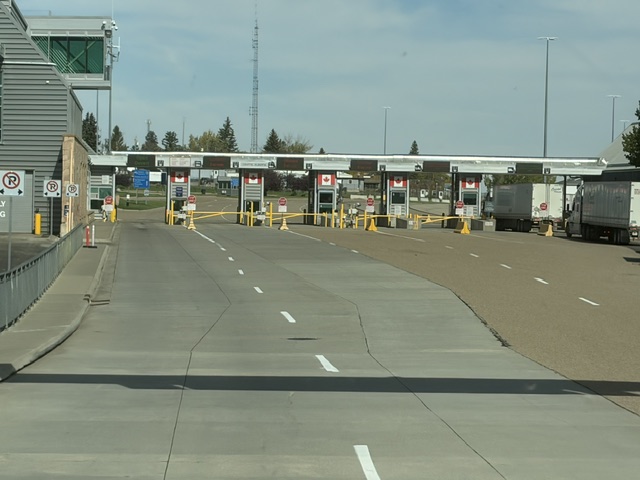
We crossed the Canadian boarder at Sweetgrass MT. There was no wait and with passports in hand it was no problem. Re-entry into the US was easy as well.
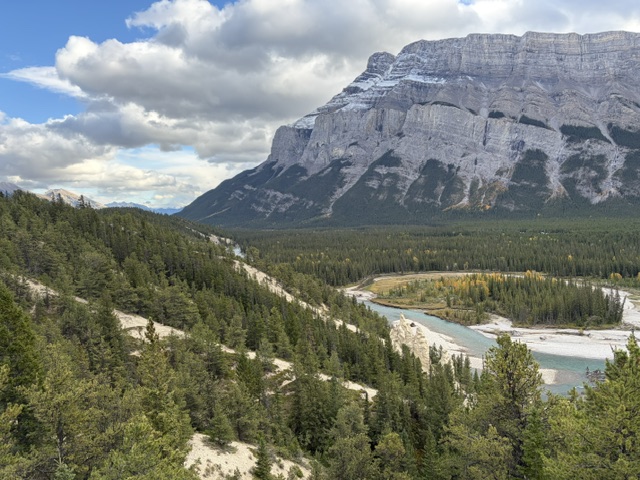
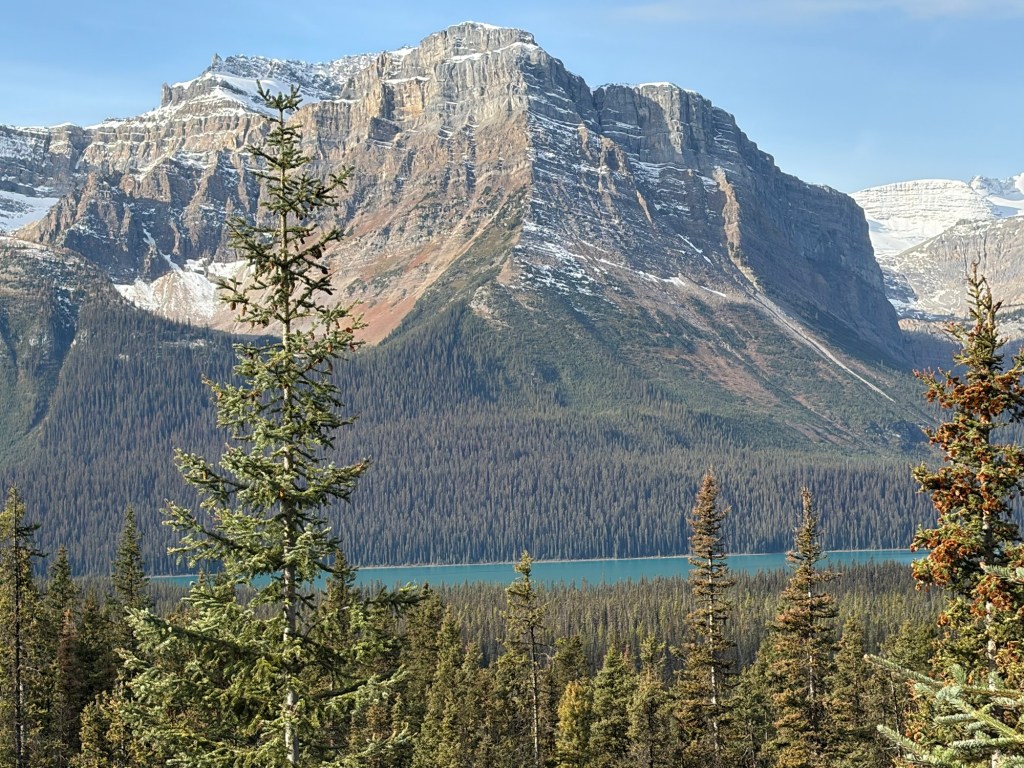
Different from the US Rocky Mountains, the Canadian Rocky Mountains are very steep peaks mostly of sandstone and limestone, with deep wide river valleys. Thick areas of Pine and Aspen trees cover the lower elevations, with recent mountain snows on the peaks with numerous glaciers visible in the crevices.
The Canadian Rockies and National Parks are in an expansive area that straddle western Alberta and neighboring British Columbia. Parking the RV at the campgrounds in Banff and Jasper National Parks allowed us to drive the car to the various points of interest and excursions we had planned.
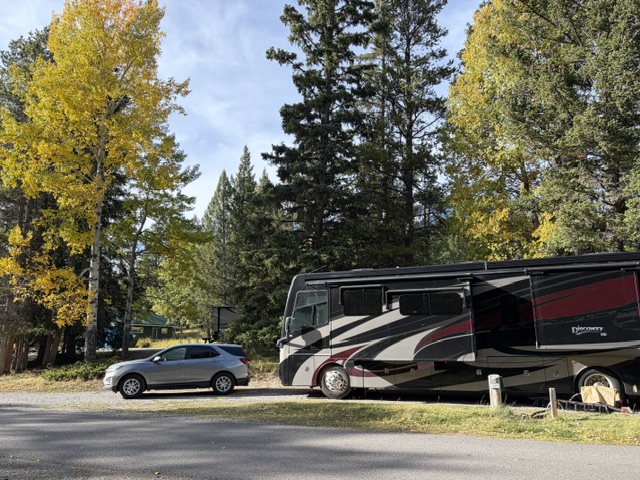
Advanced camping reservations at the parks are a must. The Canadian Parks reservation system was pretty easy to navigate https://parks.canada.ca/pn-np.
You need to set up an account and check the dates that various park reservations become available for the upcoming season. I started making reservations for Banff (Tunnel Mountain Campground) and Jasper (Whistlers Campground) the first day the reservation window opened for the 2026 season, which was in January. Both are large campgrounds with a variety of sites available, including full hook up sites. You can also make park shuttle bus reservations through this reservation system. Recommend making reservations as early as possible – they go fast!
In addition to the reservations made through Canada Parks, we purchased an excursion package through Pursuit – Banff/Jasper Collection: https://www.banffjaspercollection.com/attractions/pursuit-pass/#pursuit-passrockies. Our favorites in this package included the Banff Gondola, Maligne Lake Cruise and Columbia Icefield adventure to Athabasca Glacier.
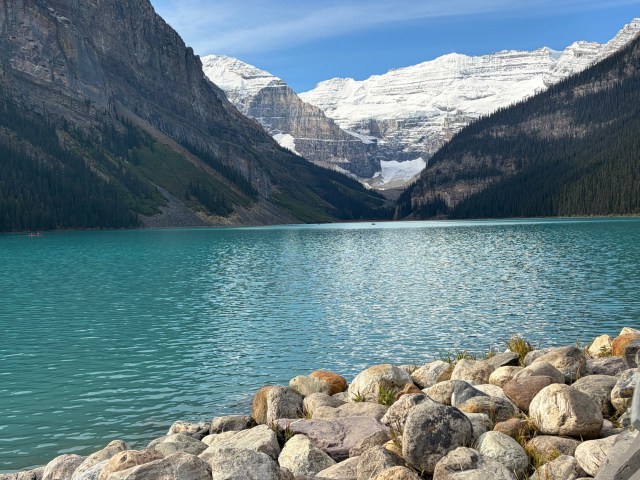
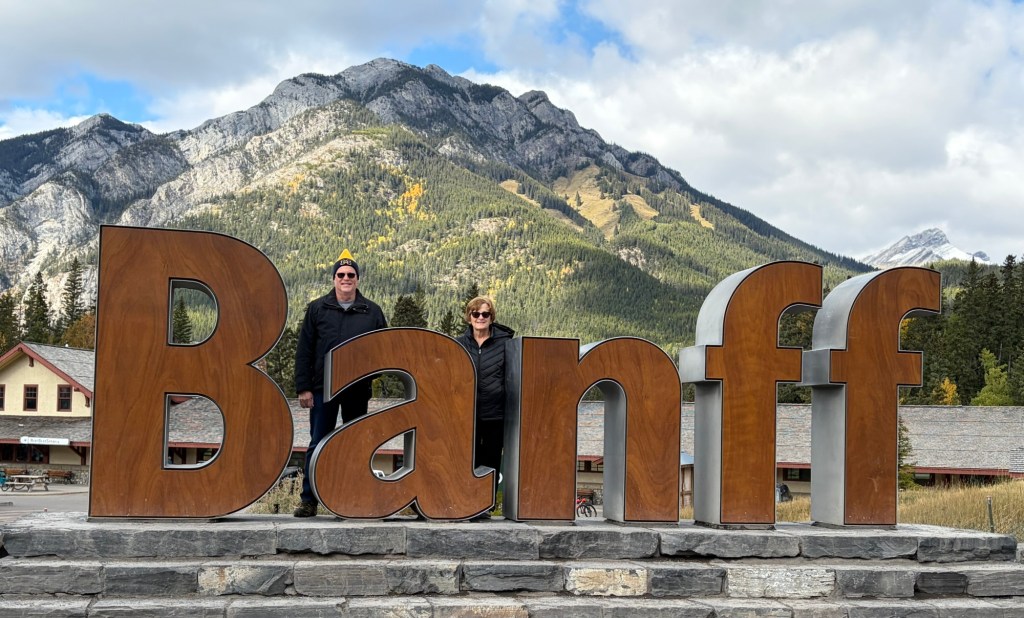
Banff National Park and Town of Banff (Alberta): Obviously the unique beauty of the area makes this a very popular destination for travelers from all over the world. We found the town of Banff to be very busy with crowded streets and shops, and making parking a challenge. There is free bus service from the campground into town (no reservation required), stopping at multiple locations and attractions.
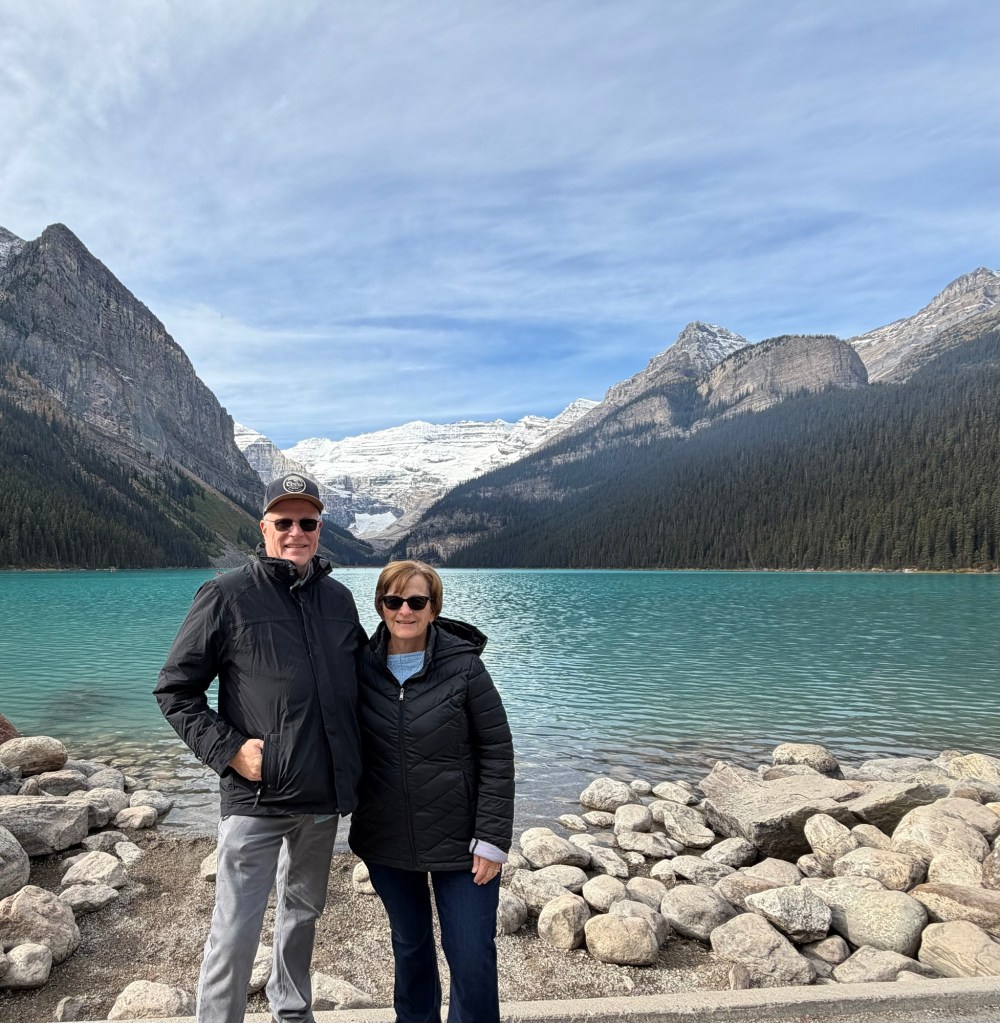
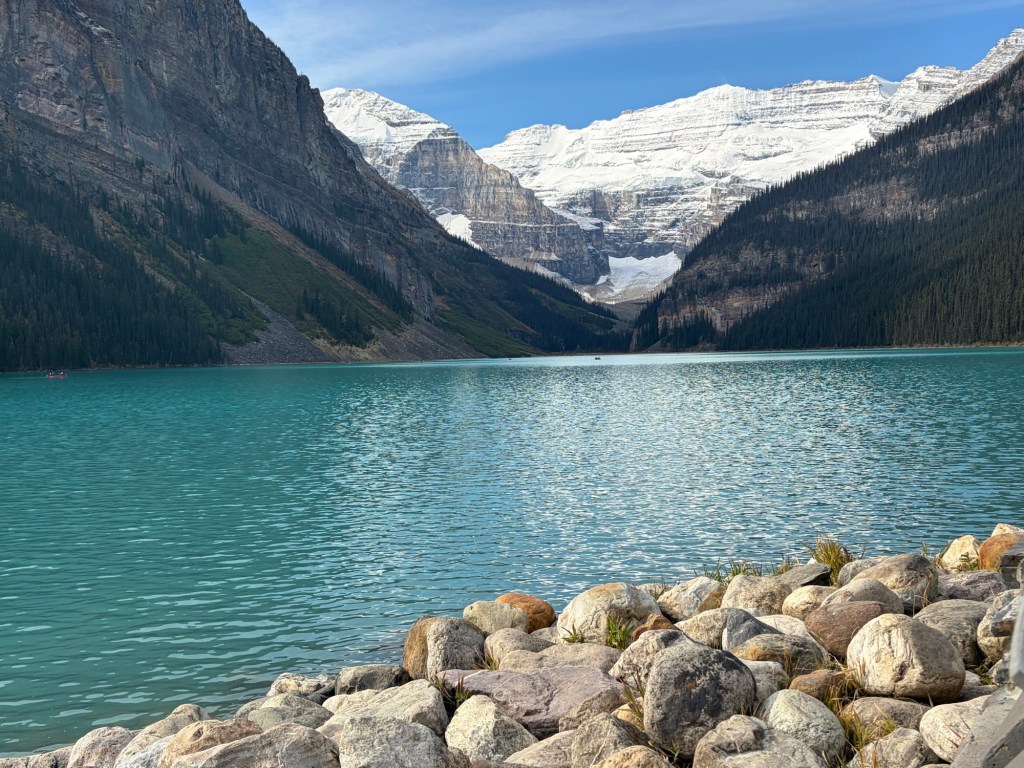
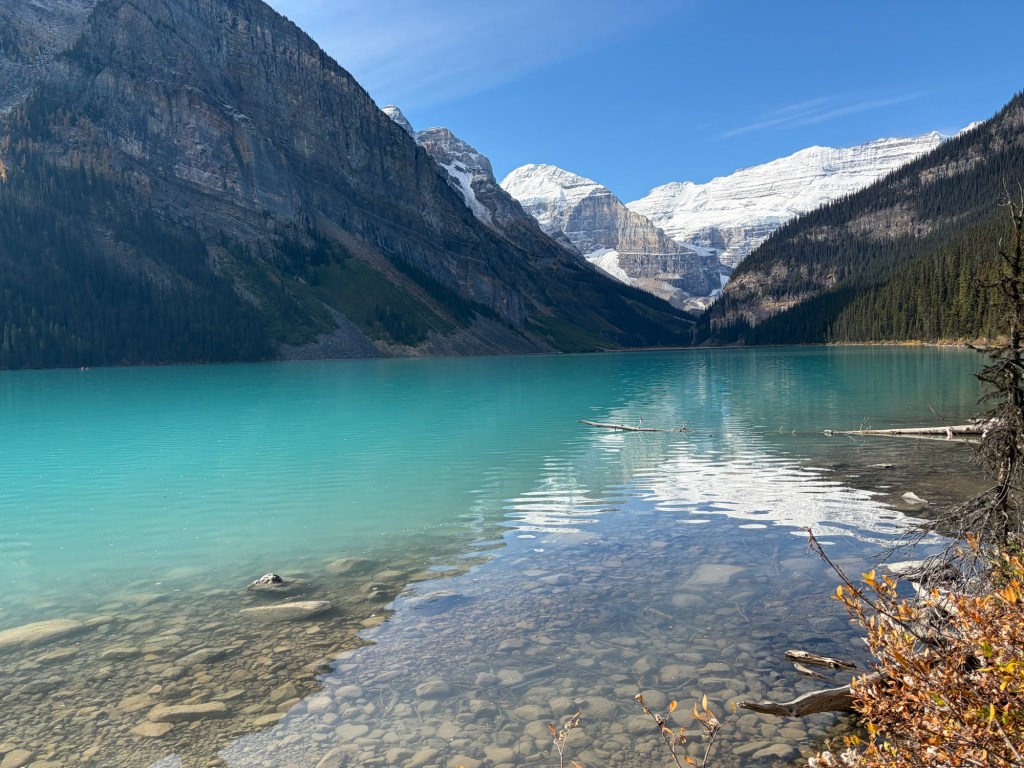
One of the area’s most popular attraction are the turquoise mountain lakes, especially Lake Louise. Located about 40 miles north of Banff, we took the Lake Louise shuttle from a designated parking area to the Lake due to limited parking.
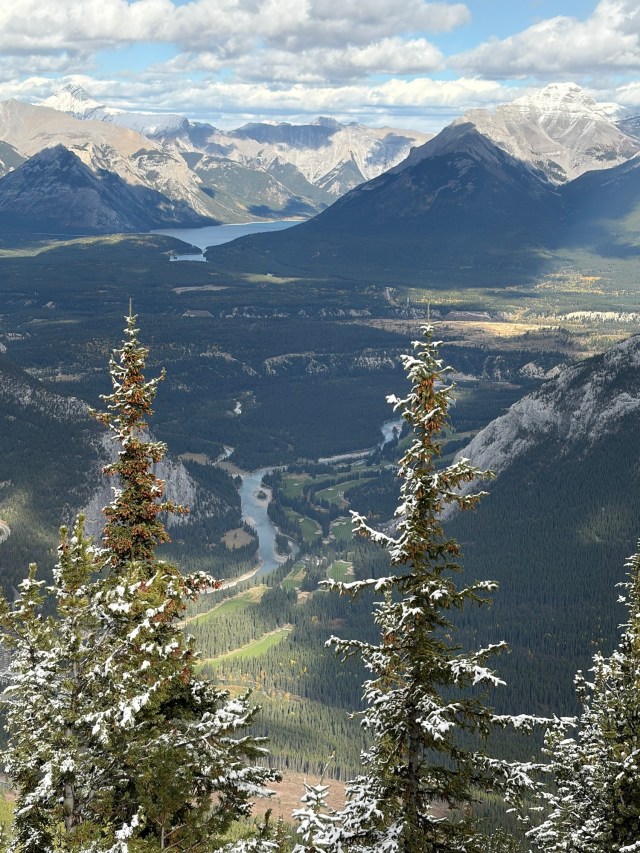
The visitor area at the base of the lake was very busy, but thinned out as you walked the trail around the side of the lake. Several glaciers feed Lake Louise, including the Victoria Glacier that you see in many pictures. The minerals and rock flour in the glacier ice melt contributes to the turquoise color of the lakes. There are multiple mountain lakes in the Banff Park area, other lakes that are beautiful and easy to get to are Moraine and Minnewanka.
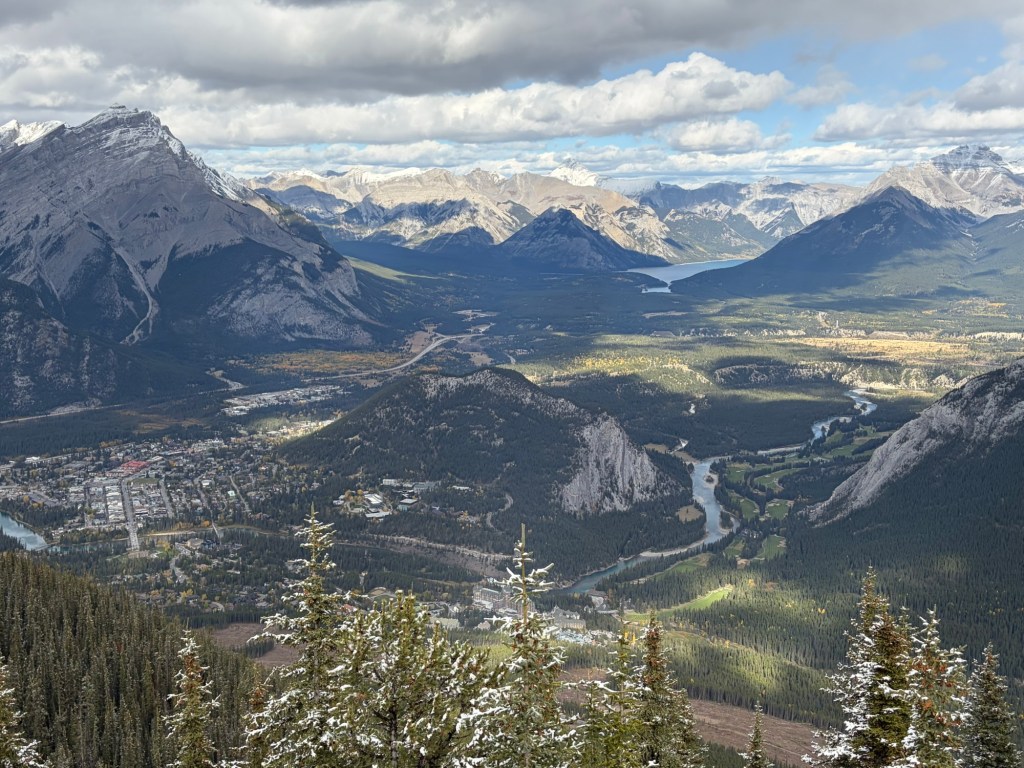
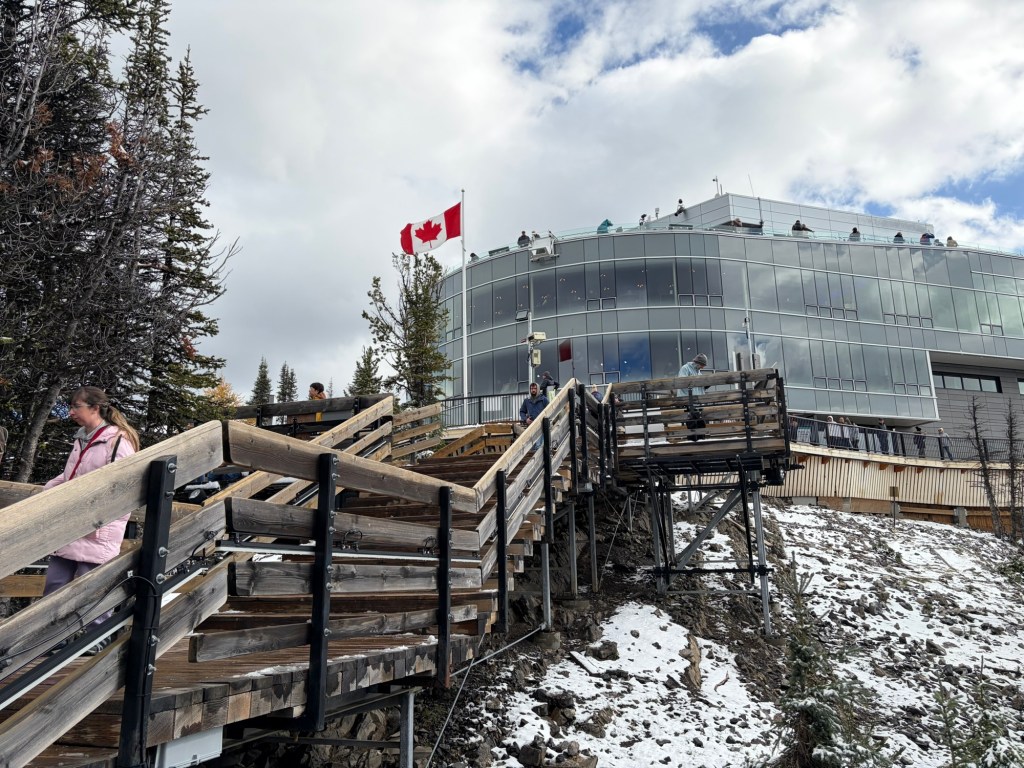
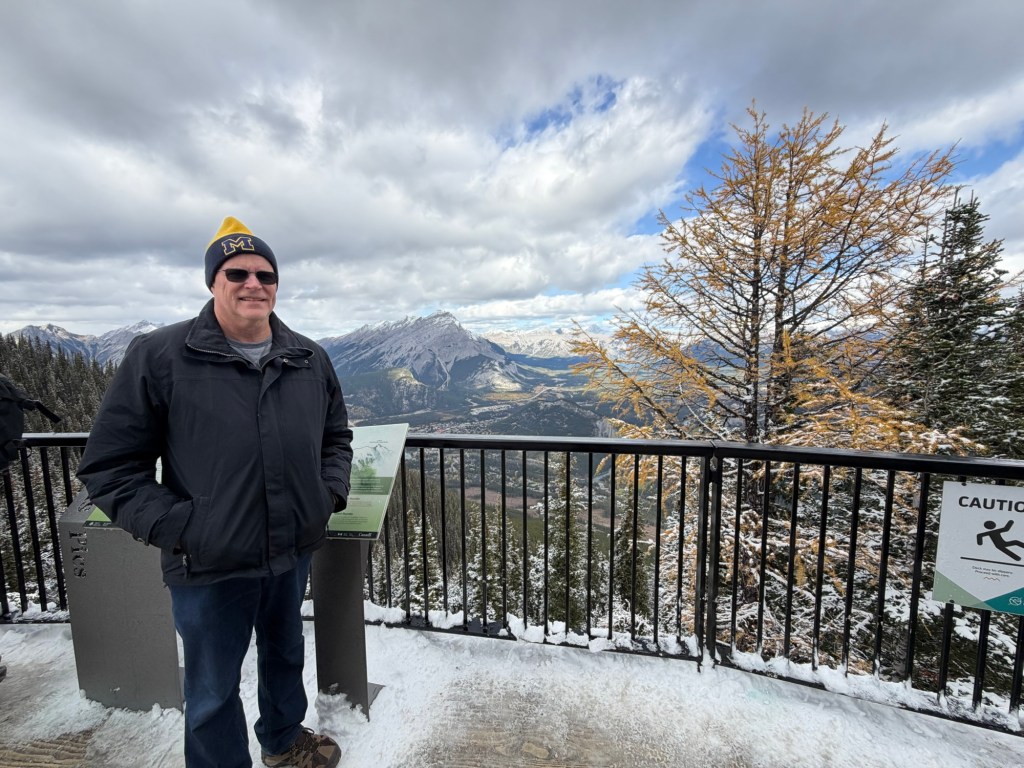
The Banff Gondola takes you to the summit of Sulphur Mountain. At the top there is a restaurant, gift shop and huge deck that overlooks the Bow Valley, Town of Banff and six mountain ranges.
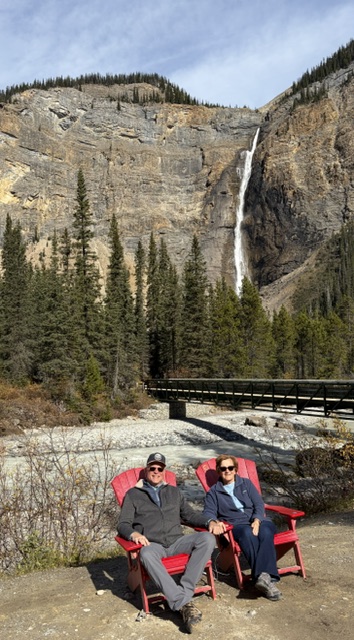
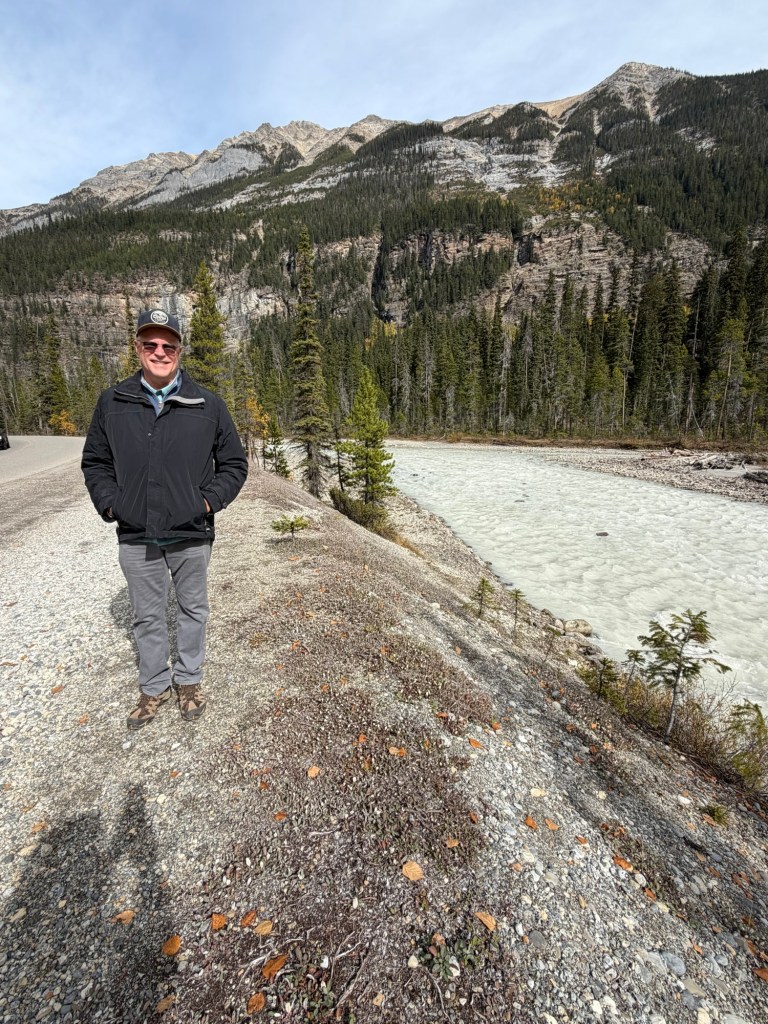
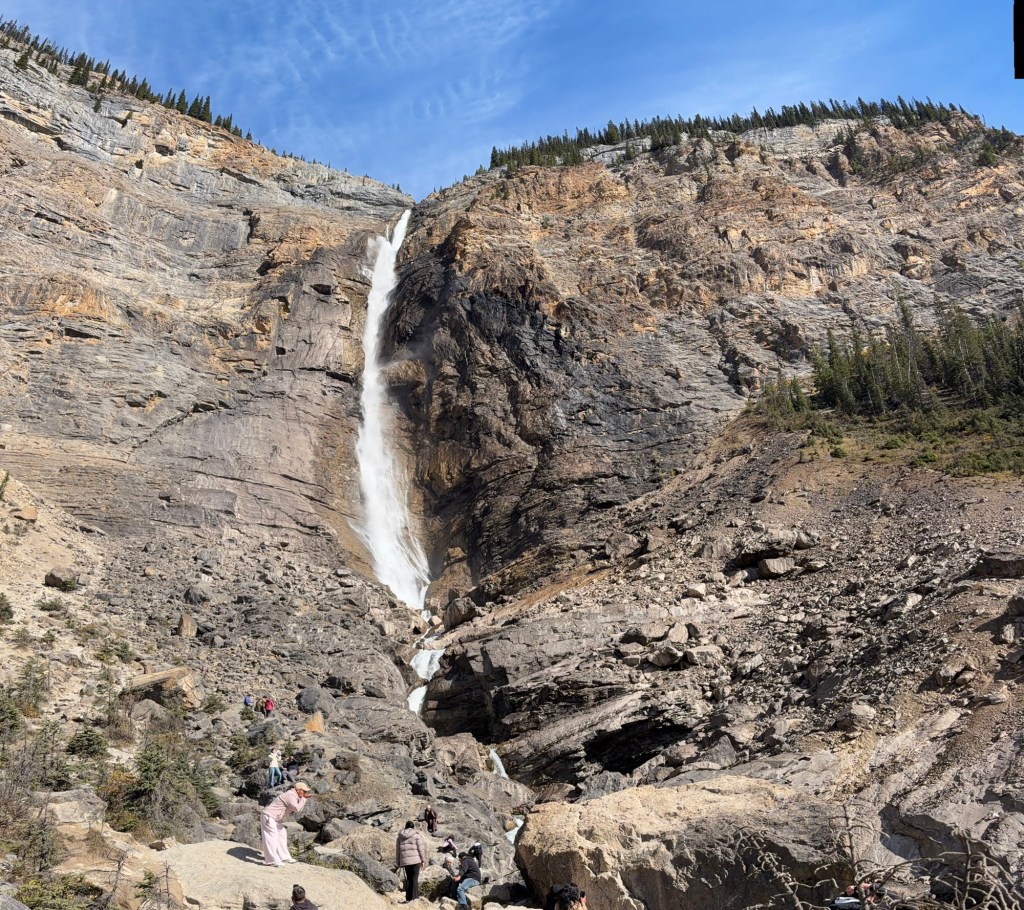
Yoho and Kootenay National Parks (British Columbia)- From our base in Banff, we drove to parts Yoho and Kootenay National Park. Takakkaw Falls in Yoho is one of the highest waterfall in Canada and is fed by the Daly Glacier and nearby icefield. In this part of the park, the Yoho River turns milky white from the sandstone rock flour.
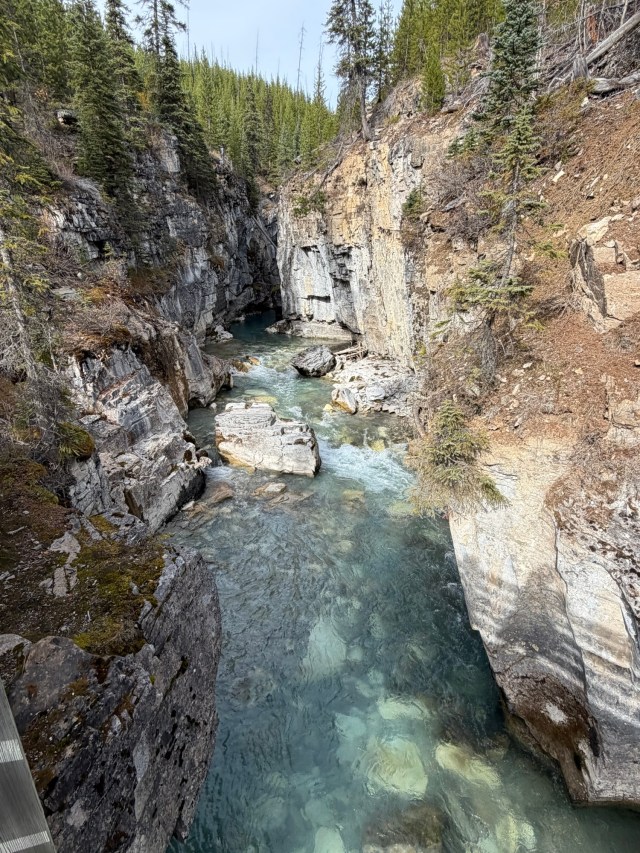
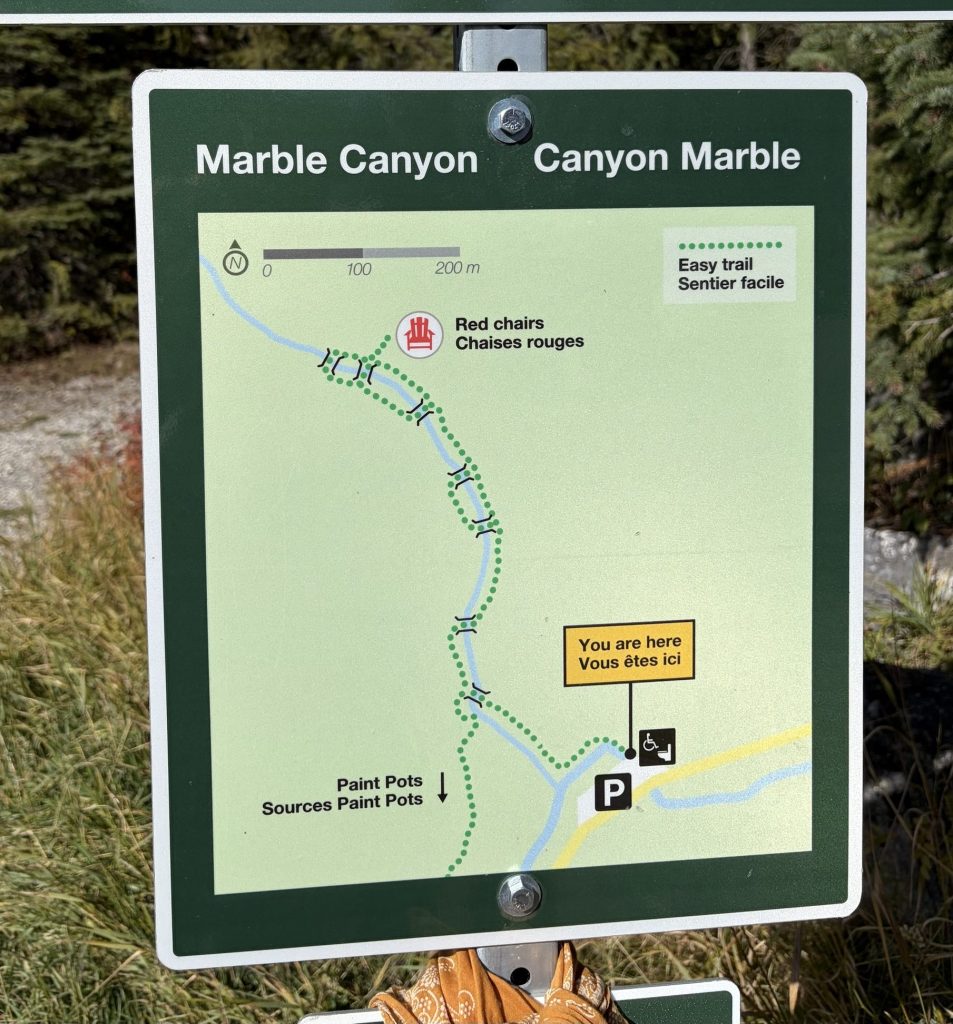
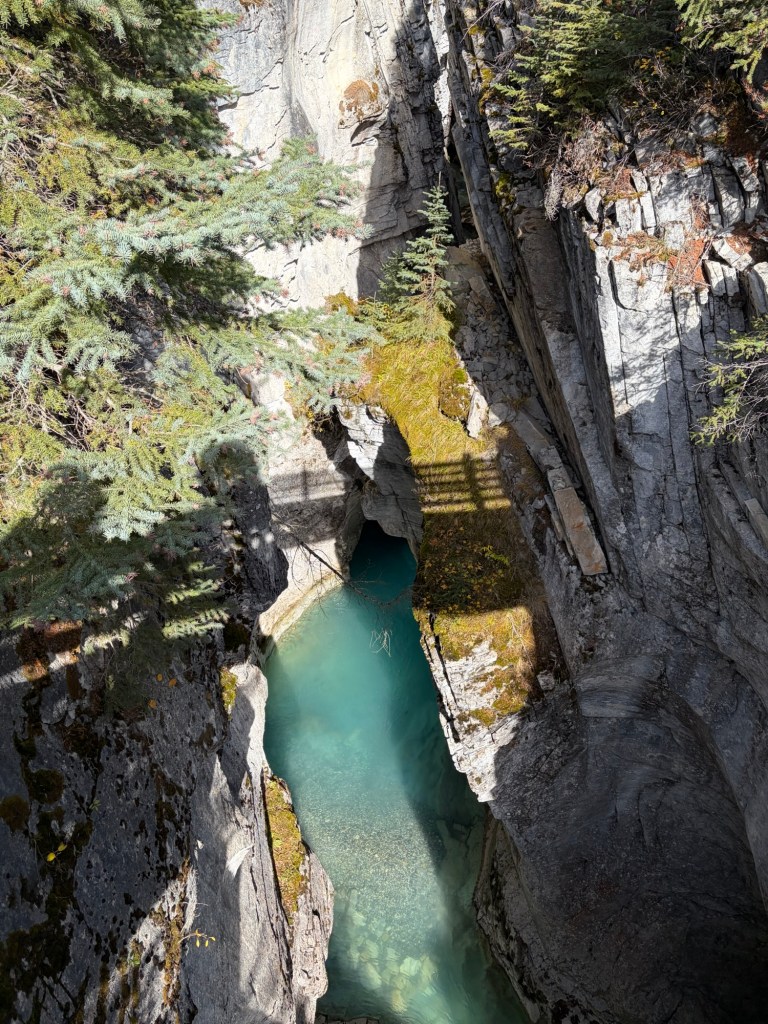
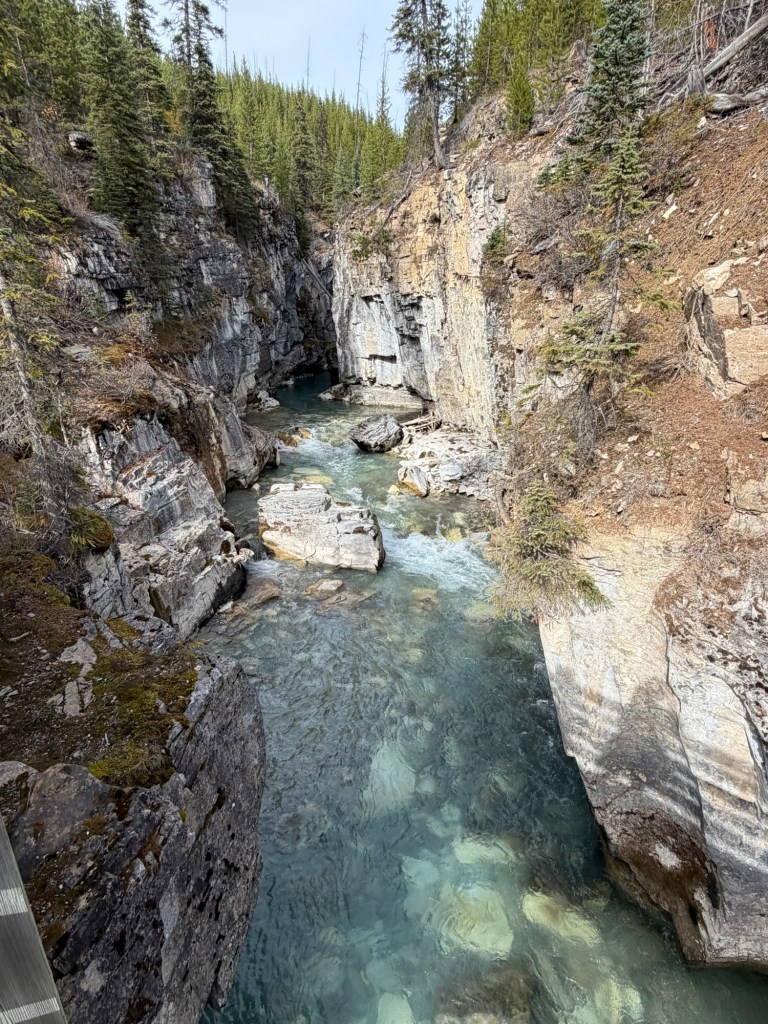
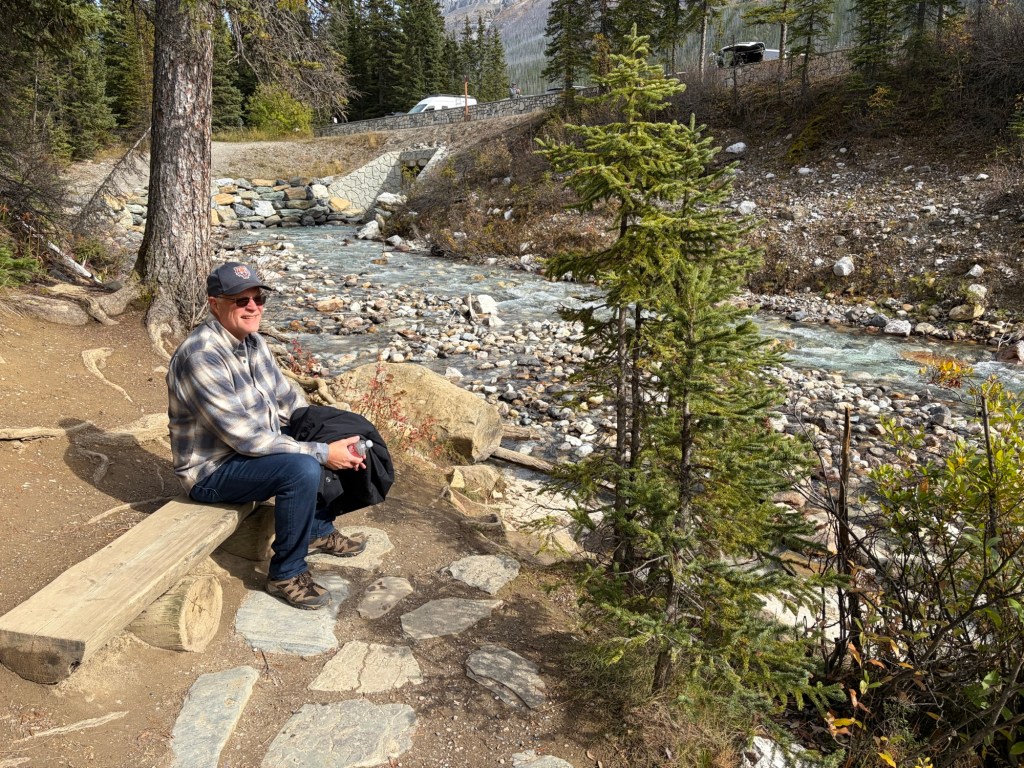
In Kootenay NP we did a short hike in Marble Canyon. The hike features multiple bridges that you can cross and view the water running through the deep slot canyon at various heights.
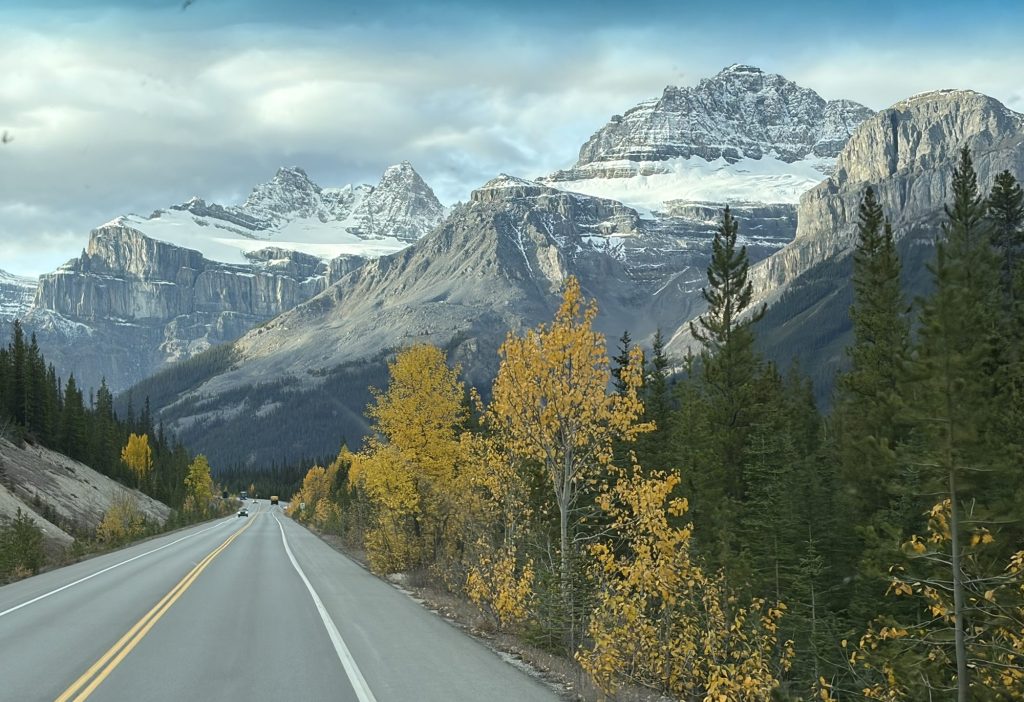
Jasper National Park and Icefields Parkway – The Icefields Parkway (Hwy 93) runs north from Banff National Park through Jasper National Park to the town of Jasper for about 150 miles. It is a very scenic drive along the continental divide with numerous stops and side roads to numerous mountain lakes, hikes, and other points of interest. Peyto Lake, Athabasca Falls and the Columbia Icefield are all located along this highway.
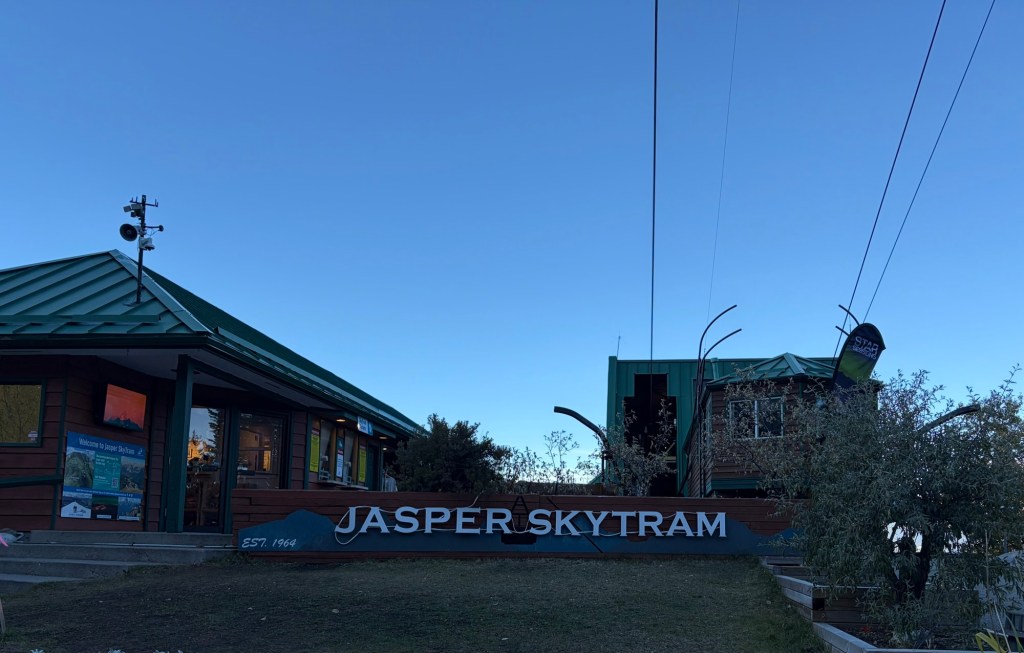
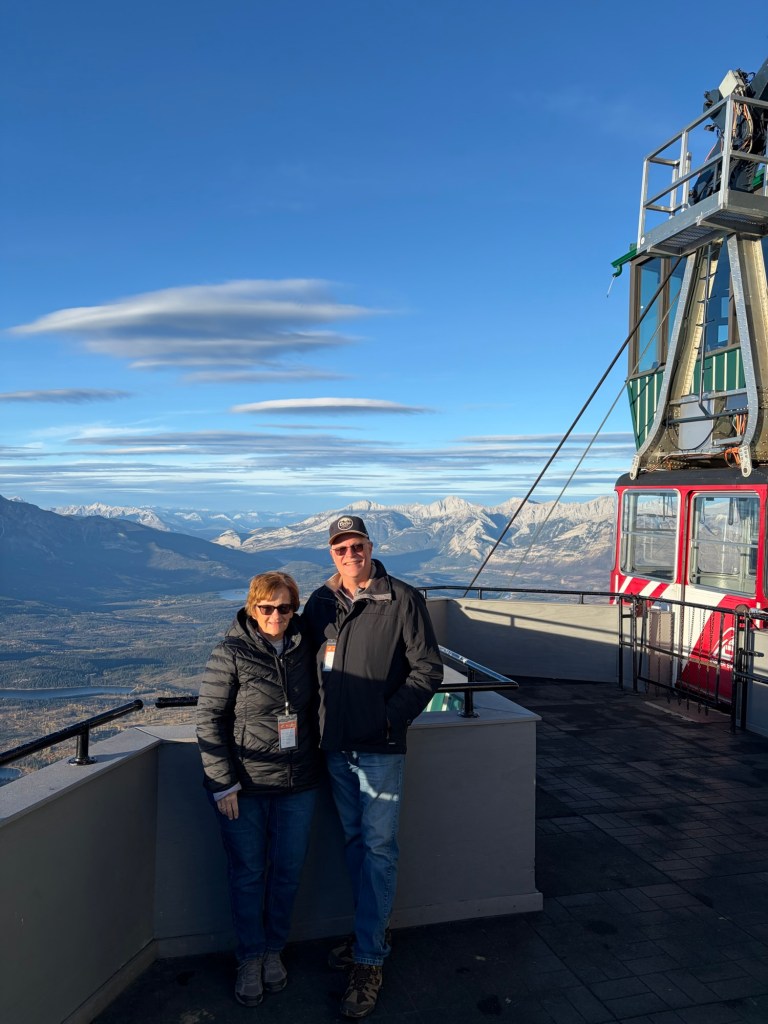
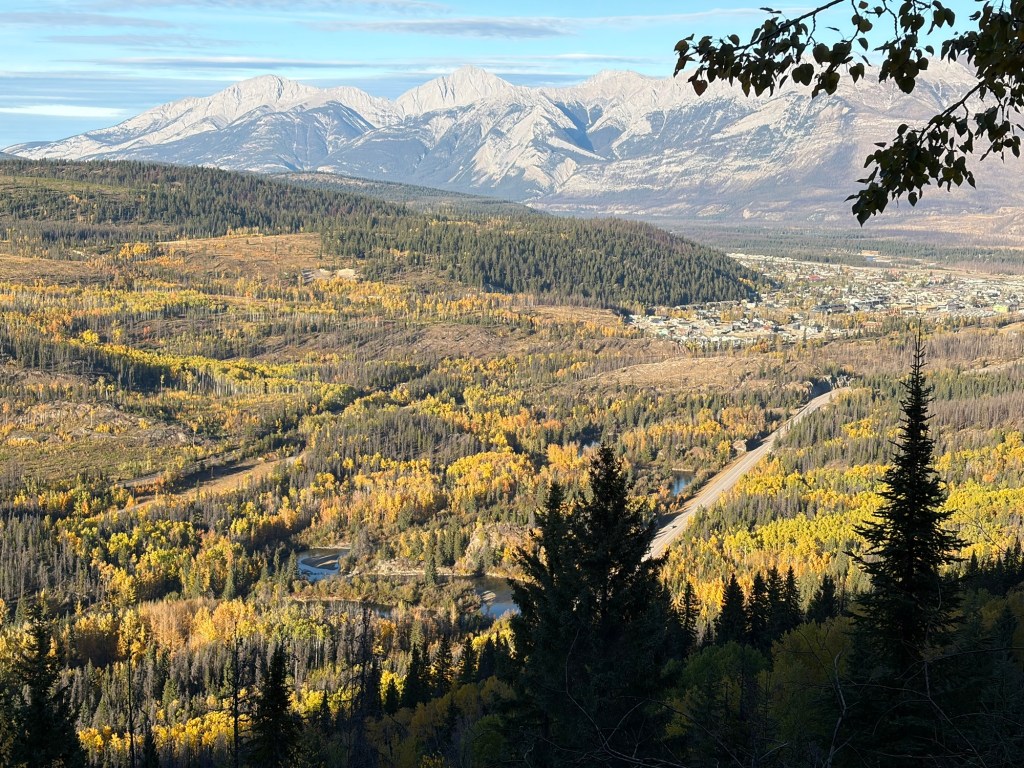
As you approach Jasper you see damage from a large 2024 wildfire that also burned about 1/3 of the town of Jasper. There are miles of burned trees in some areas, but also a lot of beauty, with rebuilding going on. We really enjoyed this area being less crowded and staying at Whistlers Campground that was rebuilt after the fire. We rode the nearby Jasper Skytram to the top of Whistlers Mountain where they had multiple telescopes set up for evening star gazing.
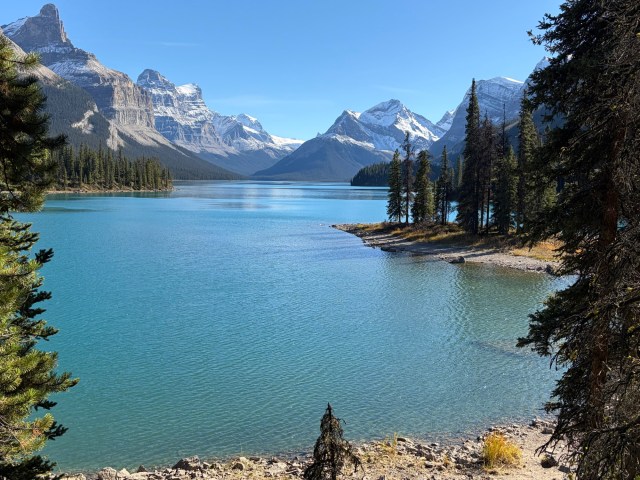
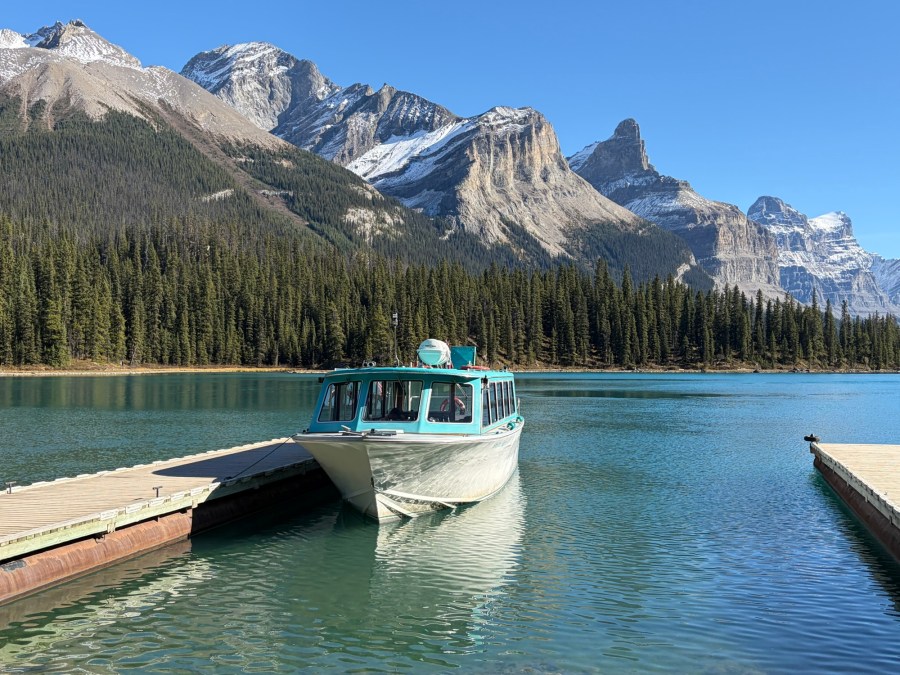
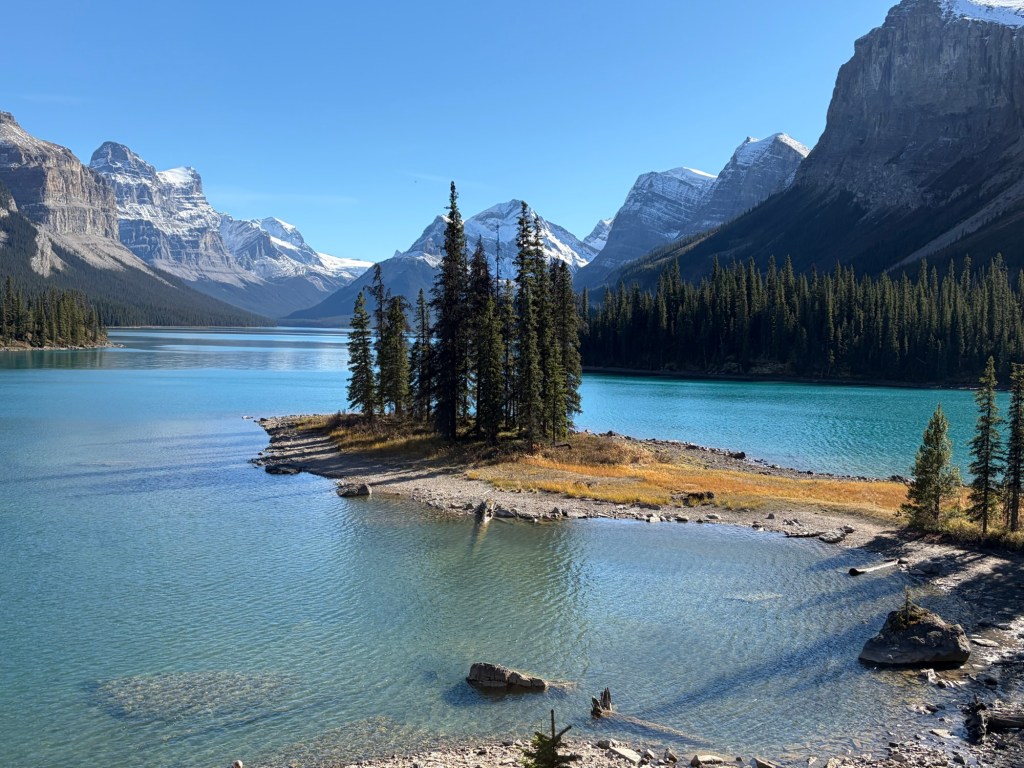
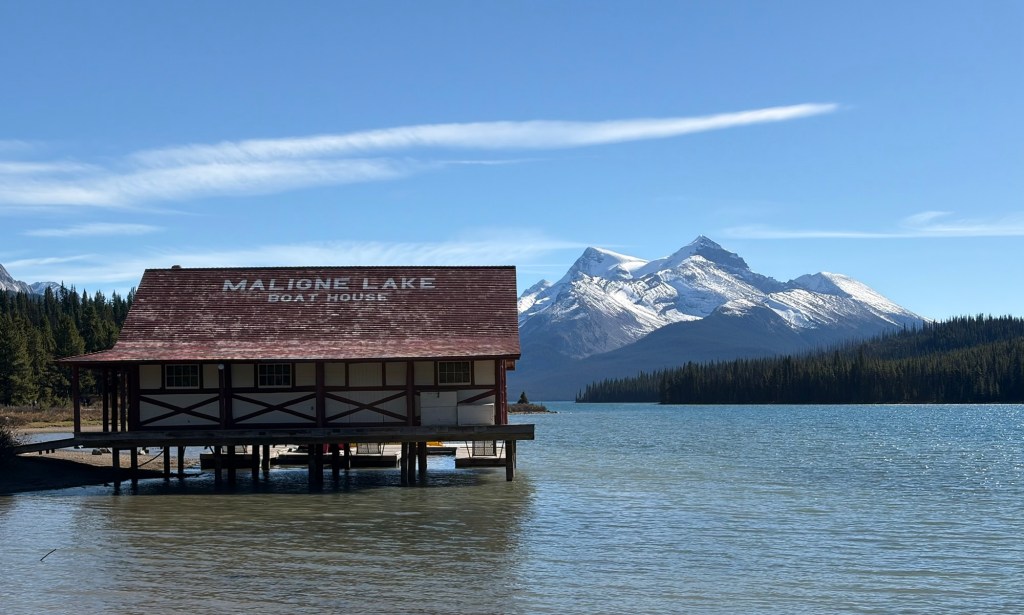
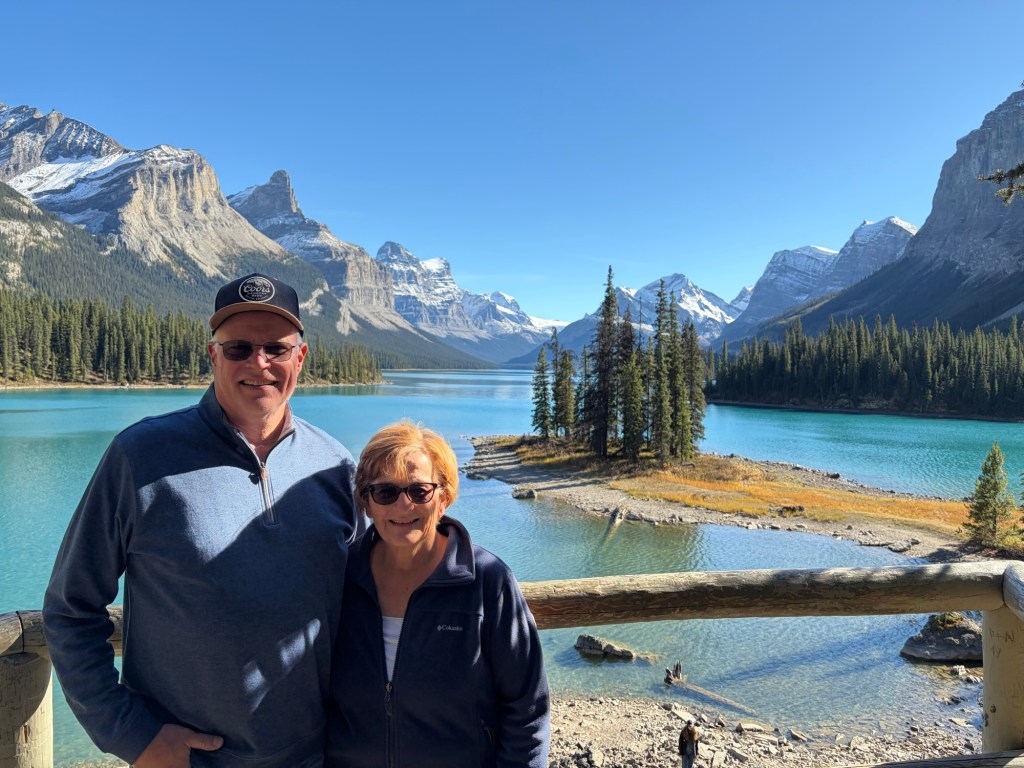
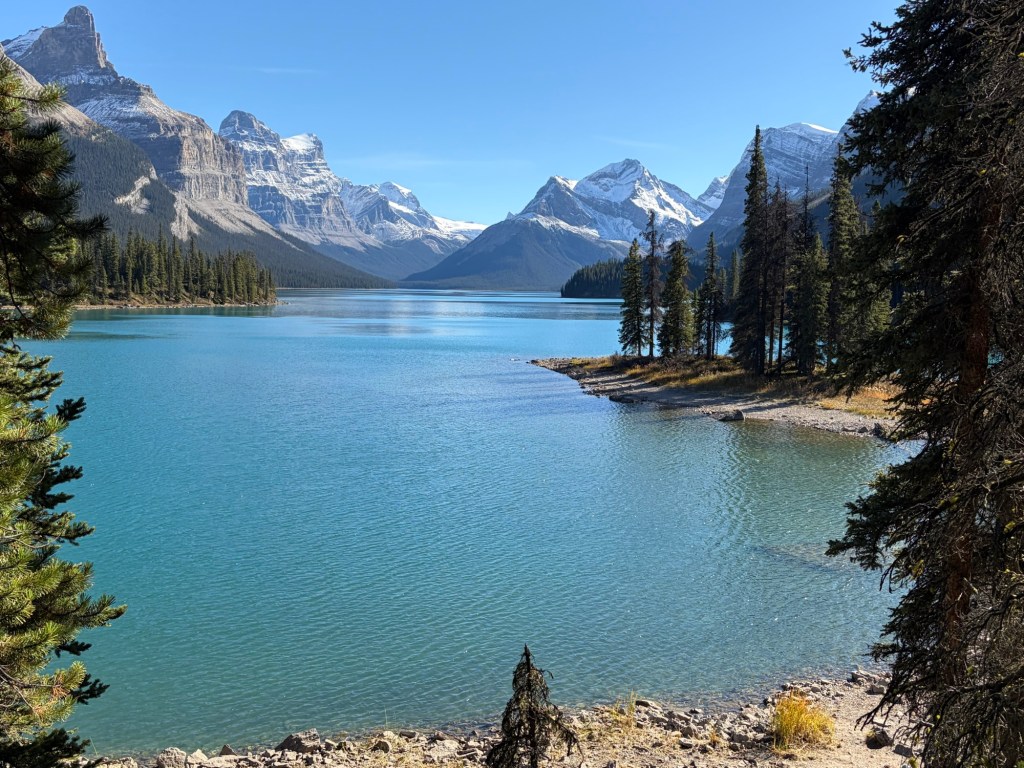
Several other excursions from Jasper were exceptional: the Columbia Icefield/Athabasca Glacier and Lake Maligne. We took the Lake Maligne (pronounced Ma-leen) boat ride on a beautiful sunny day with the guide explaining the history of the area and pointing out the glaciers that surround the lake. “Spirit Island” in the lake is a protected area only accessed by the native people who consider it sacred ground.
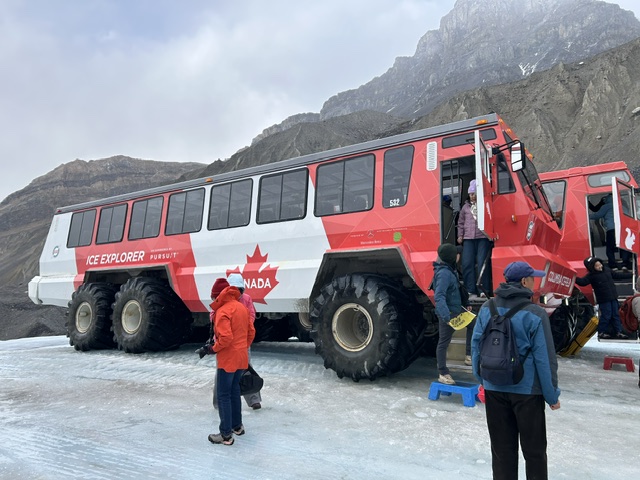
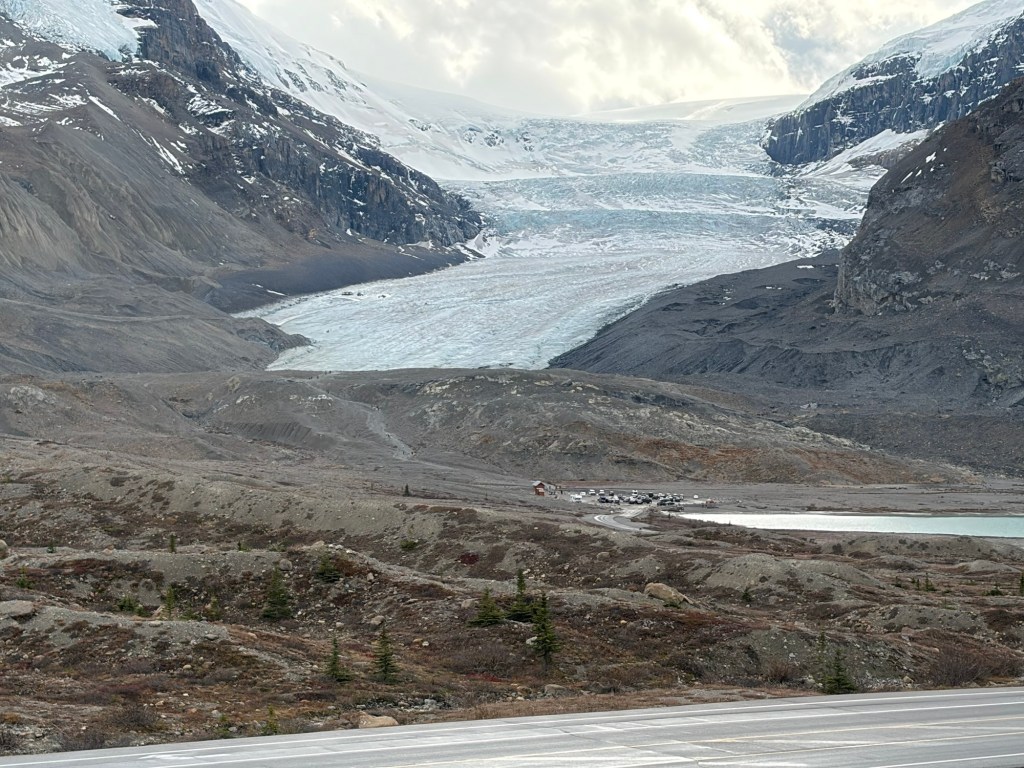
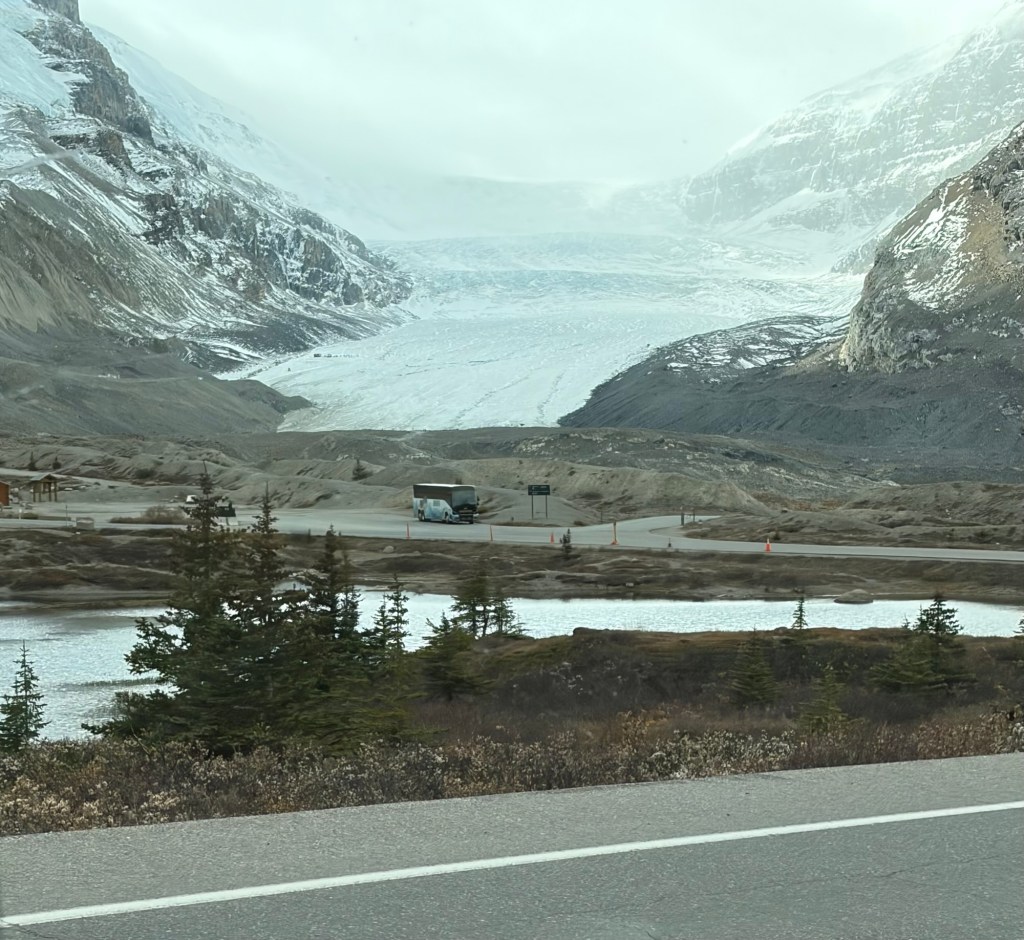
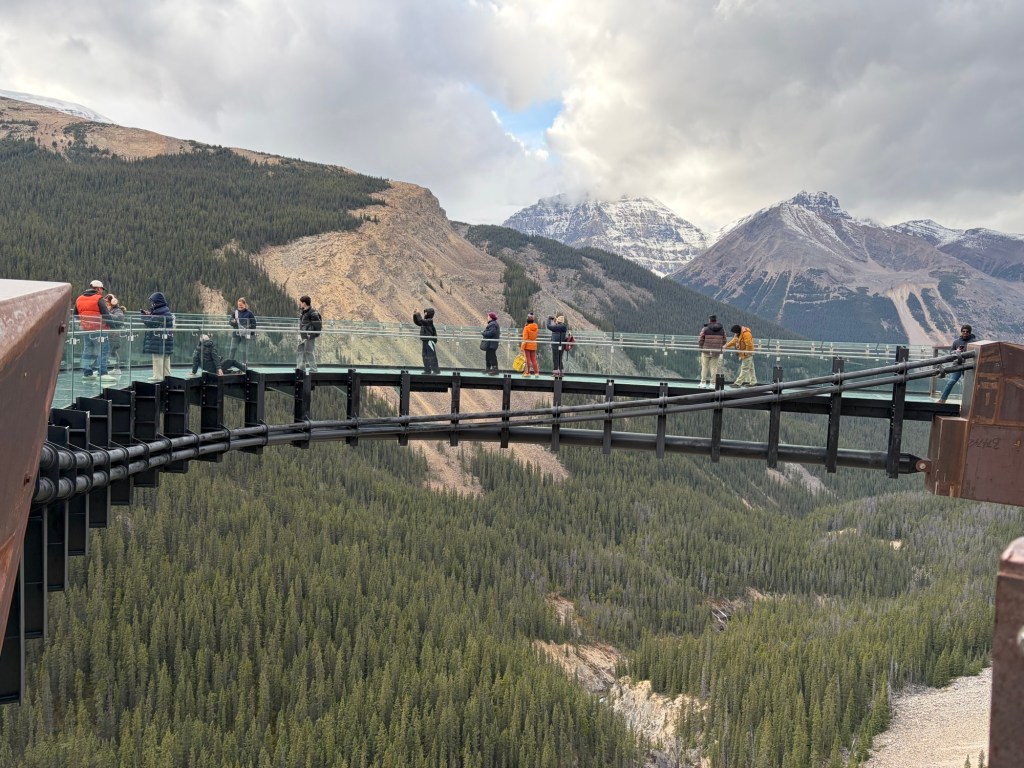
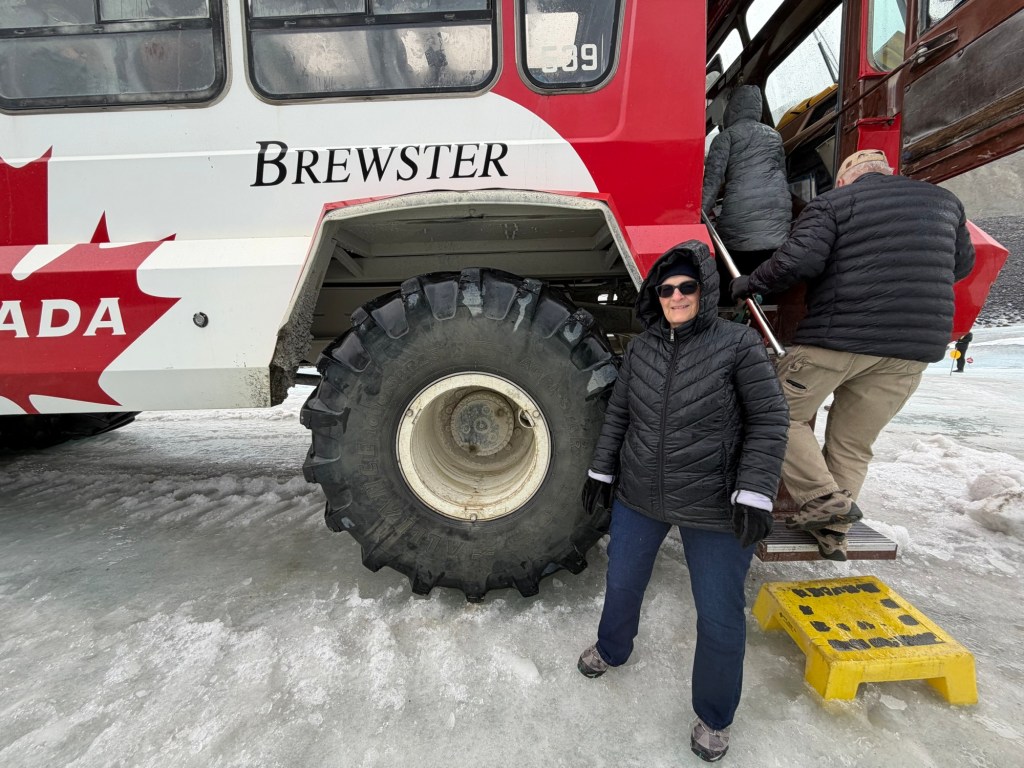
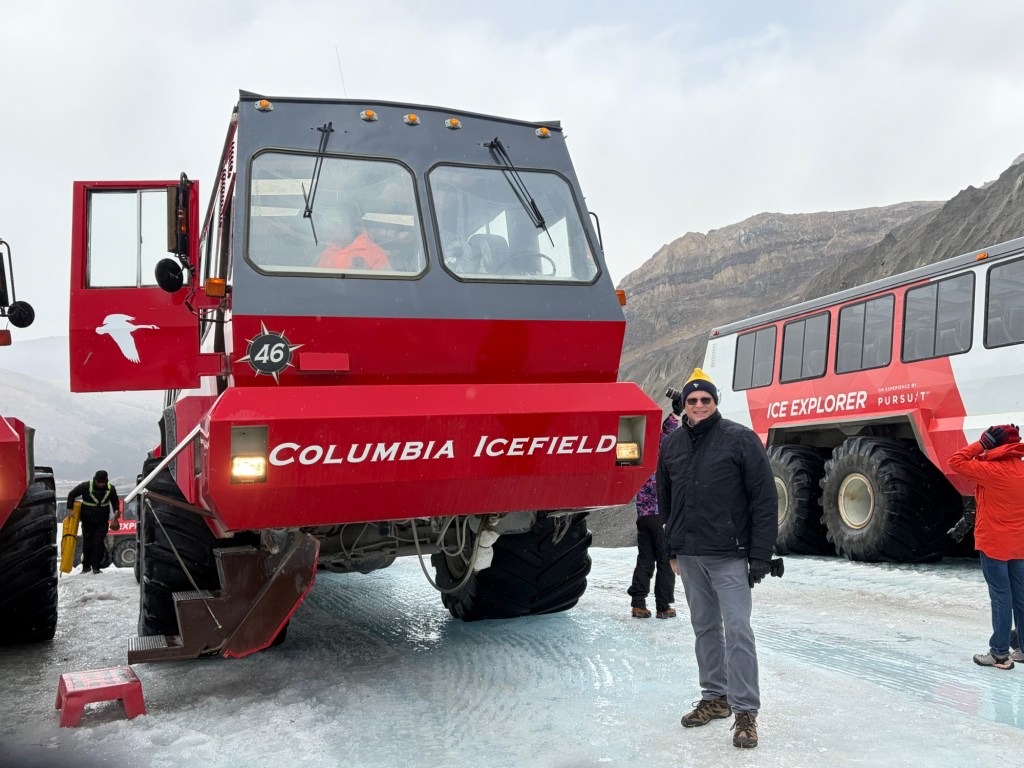
The Columbia Icefield/Athabasca Glacier excursion was quite unique. From the main building along the Icefields Parkway we took a bus to a lot near the glacier. We transferred to an all terrain Ice Explorer vehicle for the ride up onto Athabasca Glacier.
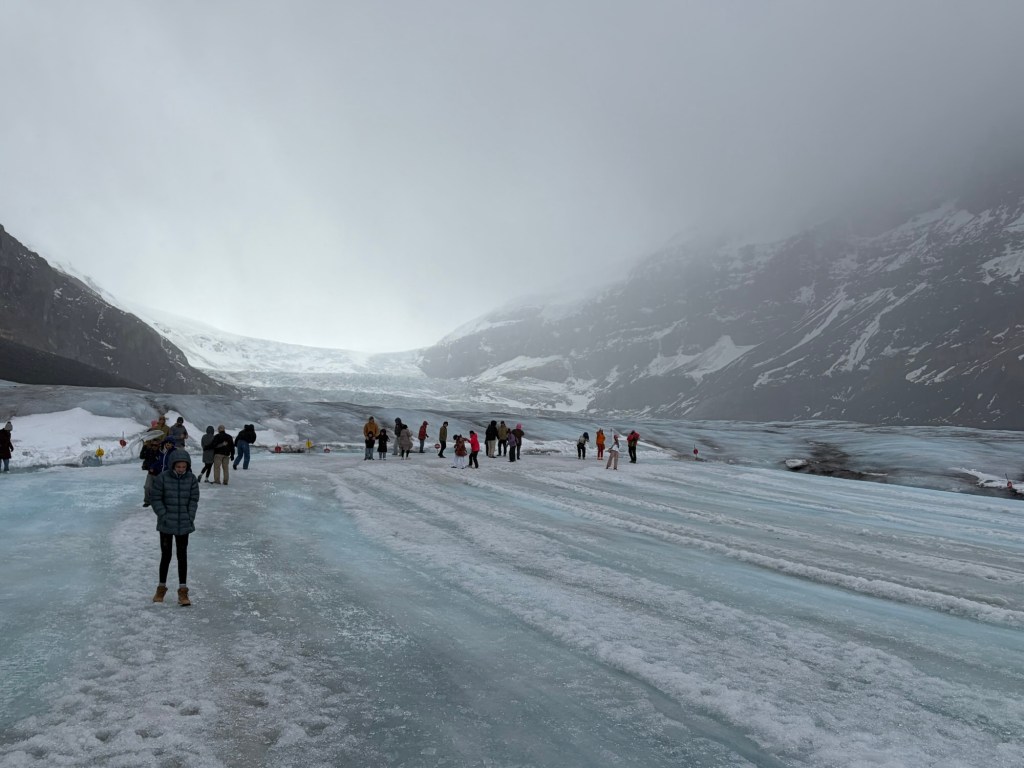
Although it is shrinking, like all the glaciers worldwide, Athabasca Glacier is still 550′ deep and is part of the Columbia Icefield that extends over 100 miles back from the glacier.
We were able to get out of the vehicle and walk around a little, but it was very windy, cold and slippery! Still enjoyed the experience and just stood in awe of the diverse landscape of this area.
Our last stop in Canada was in Cochrane, Alberta near Calgary. When we left Canada and drove south through Montana and Wyoming, we stayed ahead of an incoming winter storm avoiding the snow and headed to our Florida home for the winter.
That’s a wrap on the 2026 Fall trip. A total of 6,269 RV miles and about 6 weeks, from Michigan to Colorado to Banff/Jasper Canada to Florida. A very special trip!


Looks so beautiful, so happy for you and your adventures. What an exciting way to celebrate 50 years of love and marriage.
LikeLike